
The Low-Hanging Fruits in the AI Garden
In the dynamic world of AI, a multitude of opportunities exist, offering readily available solutions with substantial benefits. Even organizations with limited resources or AI experience can harness these accessible options. Let's explore some of the most impactful ways AI can quickly enhance your organization's operations and outcomes.
Automated Document Classification and Data Extraction
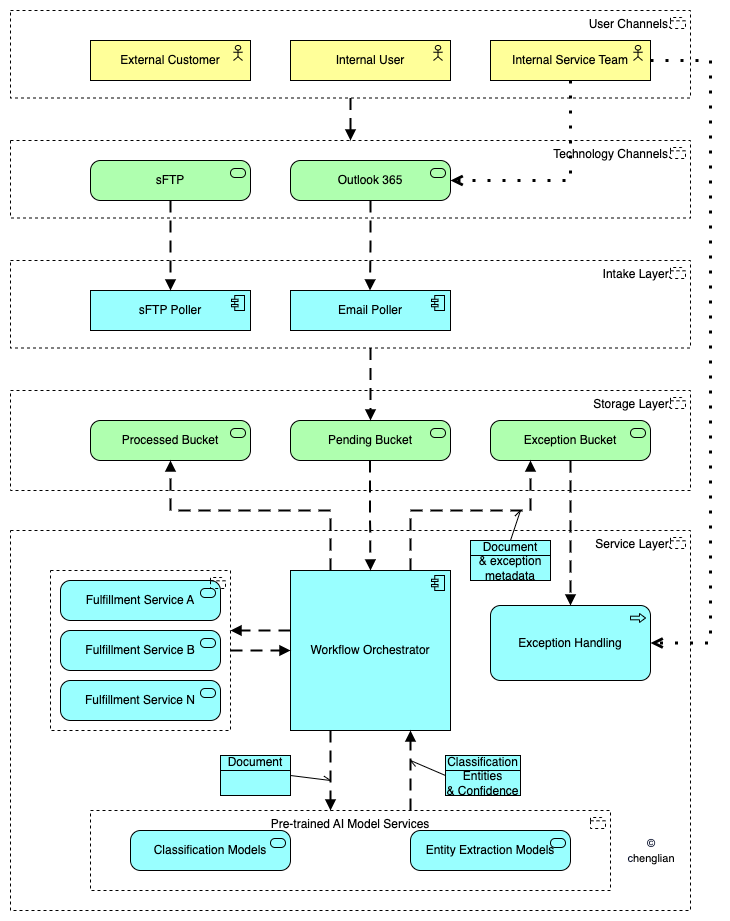
The overwhelming volume of documents modern organizations face can be streamlined with AI-powered automation. By defining classification categories, organizations can automate document classification based on intent, service requests, product categories, customer groups, and more. AI enables the extraction of crucial information like names, dates, and amounts from unstructured documents. This automation can initiate downstream workflows for end-to-end processing. Input can originate from file drops or emails containing attachments. For example, Microsoft Power Automate [1], along with Microsoft prebuilt AI models [2], facilitates invoice and receipt processing, entity extraction, category classification, and more. Microsoft provides versatile AI models as native cloud services. These Azure AI models can also be deployed as container images within your environment, ensuring data security and compliance [3]. Microsoft AI Builder allows organizations to build their own document processing models - tailored to the organization - by training the models with specific sets of documents.
One caveat is that organizations using pre-trained AI models must consider the confidence level of the AI's output. Workflows should be designed to allow for human intervention or extra verification when the confidence level falls below the acceptable risk threshold for the specific use case.
Semantic Search-Enabled Knowledge Engine
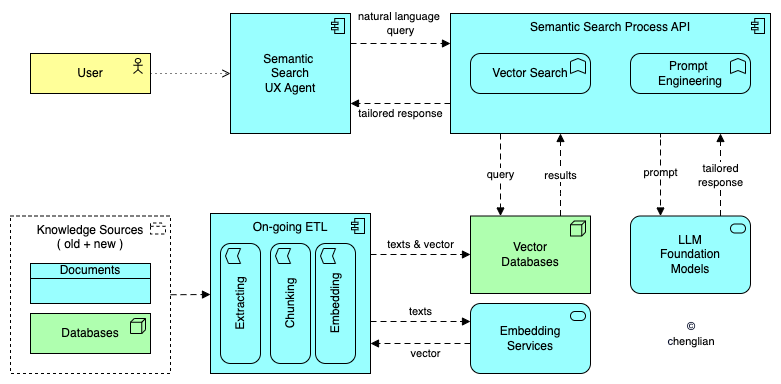
While internal knowledge bases are invaluable, traditional keyword-based search often falls short. By utilizing vector databases and embedding services, organizations can construct semantic search-enabled internal knowledge bases encompassing policies, processes, employee information, technology and product information, and more. User queries, enriched with organization-specific information through prompt engineering, can be seamlessly integrated with LLM models for tailored responses; this is so-called retrieval-augmented generation (RAG). Employees can interact with these engines using natural language for direct resolutions or next-step instructions, effectively replacing level-one support. Similarly, a public-facing knowledge base with semantic search empowers customers to resolve issues independently, enhancing satisfaction and loyalty.
It's important to acknowledge that LLMs, even with RAG, can sometimes generate incorrect or nonsensical responses; apply mitigations where necessary (e.g., response validation, user feedback mechanisms).
Natural Language as a Product Interface
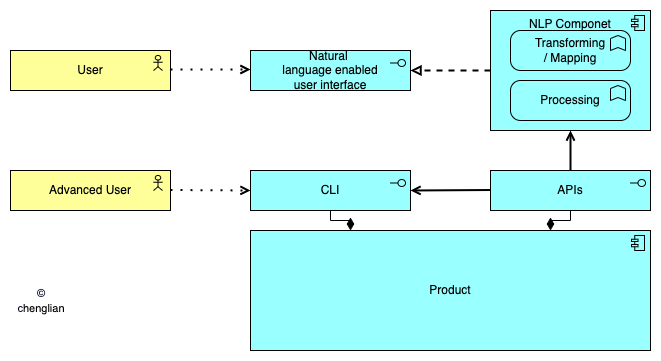
Expanding beyond traditional UI/CLI tools and APIs, organizations can incorporate natural language interfaces into their products, allowing users to interact using everyday language. Product-specific knowledge and prompt engineering enable foundation models to determine the appropriate API triggers and parameters. Microsoft Copilot [4] exemplifies this, and we can anticipate similar advancements, like Amazon's online store potentially offering a chatbot for streamlined tasks. Database providers like Oracle are already integrating natural language interfaces into their query engines [7].
LLM-Backed Chatbots and Chat Apps
Even before LLMs, chatbots were prevalent in customer service and support. Chatbots and chat apps can be used as agents for search engines or process orchestrations. LLMs significantly enhance their capabilities, fostering natural conversations, improved intent understanding, and effective resolution of complex queries. In customer service, LLM-powered chatbots handle a broader range of inquiries, offer personalized recommendations, and seamlessly escalate issues to human agents. Internally, chatbots or chat apps assist employees with IT troubleshooting, onboarding, and other tasks, optimizing IT team resources.
Off-the-Shelf AI-Powered Products and Solutions
Recent AI advancements have spurred technology and business solution providers to enhance their products with pre-trained AI models. Reassessing your application and technology portfolio for strategic alignment can yield quick wins by replacing legacy products with AI-powered alternatives. Examples include payment solutions with real-time fraud detection, cybersecurity products with vulnerability and anomaly detection, and BI and data analytics platforms with built-in predictive analysis features.
Conclusion
The AI landscape abounds with readily available solutions offering immediate and tangible benefits. By embracing these opportunities, organizations can streamline processes, improve decision-making, elevate customer experiences, and gain a competitive advantage in today's rapidly evolving digital world.
References